
Regional Diplomacy, Economic Participation and the Need for Fairness
By Dhabuka
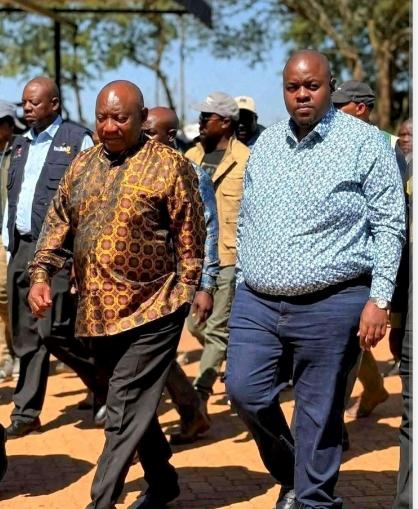
The recent criticism surrounding the meeting between President Emmerson Mnangagwa and President Cyril Ramaphosa has generated intense public debate, particularly after businessman Wicknell Chivayo appeared in photographs associated with the engagement. Yet beneath the headlines and political reactions lies a deeper issue about fairness, perception, and the treatment of successful African businessmen within public discourse.
It is increasingly becoming common for certain individuals to be judged not through courts of law or established facts, but through assumptions amplified on social media and within political spaces. Wicknell Chivayo has become one of those figures. Regardless of what he does, where he appears, or who he meets, controversy is immediately manufactured around his name. The danger with that approach is that it replaces objectivity with emotion and substitutes legal standards with public speculation.
It is common cause that allegations alone do not amount to guilt. Constitutional democracies are founded upon the principle that every individual remains innocent until proven guilty before a competent court of law. Once societies abandon that principle because of public pressure or political dislike, then justice itself becomes vulnerable to manipulation.
What is often ignored in these conversations is that Wicknell Chivayo represents a category of young African businessmen who have managed to build visibility, influence, and economic relevance within highly competitive environments. Whether one agrees with his style or not, the reality is that he has established himself as a recognised businessman whose activities consistently attract national attention. In many societies, individuals who accumulate wealth and influence outside traditional establishment structures frequently become targets of suspicion, criticism, or resentment.
There is also a tendency within African politics to celebrate international investors while simultaneously attacking local entrepreneurs who achieve financial success or proximity to political leadership. Yet no modern economy can grow without local business participation. Governments everywhere interact with businesspeople because development requires capital, entrepreneurship, networks, and investment. The relationship between political leadership and the private sector is therefore neither unusual nor inherently improper.
In Zimbabwe’s case, Wicknell Chivayo has also cultivated a public image associated with philanthropy and empowerment. Over time, he has publicly assisted churches, musicians, sports personalities, social causes, and ordinary citizens. While critics may choose to dismiss those gestures, it cannot be denied that many beneficiaries have openly acknowledged receiving support that changed their circumstances. In a country rebuilding after devastating economic sanctions and years of economic pressure, individuals who inject resources, opportunities, and financial support into communities inevitably become significant contributors within society.
Critics are often quick to highlight controversy while remaining silent about positive contributions. That selective approach creates an imbalanced public narrative. If society is prepared to discuss allegations and speculation, then fairness equally requires acknowledgment of visible acts of assistance, empowerment, and social contribution.
At the same time, the broader diplomatic engagement between Presidents Mnangagwa and Ramaphosa should never have been reduced to a controversy centred on one businessman’s presence in photographs. Zimbabwe and South Africa share strategic economic and political interests that require continuous cooperation. Regional leadership demands maturity, dialogue, and sustained engagement between neighbouring states.
President Ramaphosa’s office clarified that he had no prior knowledge regarding who would be present during the engagement. That clarification should ordinarily have been sufficient. Instead, opposition politics and social media narratives transformed the issue into a symbolic controversy designed to generate outrage rather than understanding.
President Mnangagwa also deserves recognition for maintaining regional engagement and strengthening diplomatic relations within Southern Africa. Under the Second Republic, Zimbabwe has consistently pursued re engagement and economic diplomacy aimed at rebuilding international and regional partnerships. Such interactions are essential for trade, investment, infrastructure cooperation, and regional stability.
Ultimately, societies must be careful not to normalise the destruction of reputations through perception alone. Public figures, businessmen, and political actors should always remain open to lawful scrutiny, but scrutiny must be grounded in fairness, evidence, and constitutional principles rather than hostility driven by political agendas or online sentiment.
The real focus should therefore remain on strengthening regional cooperation, encouraging African economic participation, and promoting a culture where success is not automatically treated as suspicious simply because it exists alongside political influence.