
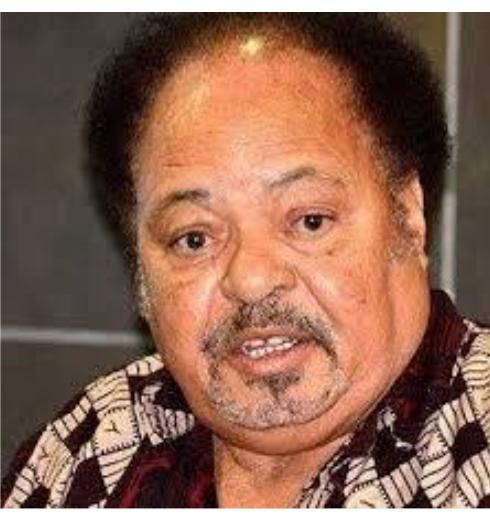
The Consistency Question: From SAPES to CAB3—When motives trump substance.
By Wilbert Muposiwa
The Zimbabwean political landscape is littered with abandoned principles. Positions once held with passion are discarded when circumstances change. Arguments advanced with conviction become inconvenient when the political wind shifts. And nowhere is this inconsistency more evident than in the current debate over Constitutional Amendment Bill No. 3.
The Zimbabwe Presidential Scholarship Alumni Association (ZPSAA), in collaboration with Harare Opinion, has raised a question that cuts to the heart of this inconsistency: If the suspension of elections for economic development was a legitimate proposal when advanced by Ibbo Mandaza and SAPES, why is it suddenly illegitimate when advanced by ZANU-PF?
This is not a rhetorical question. It is a question about intellectual honesty, about the difference between principle and partisanship, and about whether we judge proposals by their substance or by who proposes them.
The SAPES Proposal: A Forgotten History
The Southern African Political Economy Series (SAPES) Trust, led by Dr. Ibbo Mandaza, has been one of Zimbabwe's most respected academic and policy institutions. For years, SAPES argued that Zimbabwe's persistent political crises, economic collapse, and legitimacy challenges required a radical rethinking of the electoral cycle. Their proposal was clear: a transitional government and the temporary suspension of traditional party-based elections to create space for economic recovery and national healing.
This was not a fringe position. It was debated in academic circles. It was discussed in policy forums. And, significantly, the opposition backed it. When SAPES proposed a pause on elections, the argument was that elections had become sites of violence, division, and economic disruption. They argued that the country needed time extended governance time-frames to rebuild institutions, stabilize the economy, and create conditions under which elections could be meaningful, not merely ritualistic. That proposal was met with serious consideration. It was treated as a legitimate contribution to national debate. It was not dismissed as a "power grab" or "constitutional vandalism." It was engaged as a policy idea.
What changed? Dr. Mandaza's current position on CAB3
At the Sapes Trust Dialogue, participants including Mandaza agreed on a unified movement to defend the constitution, concluding that "our strength lies in our unity" and that all pro-democracy forces must consolidate under a Common Charter for Constitutional Integrity . They resolved to resist the capture of state institutions and called upon SADC to intervene.
The stunning contradiction
Let us hold these two positions side by side. SAPES Then (Pre-2013) Dr. Mandaza Now (2026)
Called for suspension of party-based elections Opposes CAB3 which extends terms and shifts presidential election to Parliament. Argued extended governance time-frames were necessary for development but now denounces the current Bill as an assault on constitutionalism. Before proposed transitional government arrangements but now fears the very continuity he once advocated, very hypocritical and cunning. Had seen elections as disruptive to development but surprisingly now defends the electoral cycle as sacrosanct. Unbelievable that such energy before is suddenly a dead end. We must learn that people change and move on. Has Mr Ibbo Mandaza moved on so quickly or he's playing a hide and seek game? The substance of what is being proposed today is remarkably similar to what SAPES proposed then. Yet the reaction is entirely different and suspiciously inconsistent. What changed? Not the substance. Not the economic rationale. Not the argument about development versus disruption. What changed is who is proposing it and who is perceived to benefit. When SAPES proposed it, the opposition saw an opportunity to restructure governance. When ZANU-PF proposes it, the opposition sees a threat to their own ambitions. The principle is abandoned. The consistency is lost.
The psychology of partisan opposition
This phenomenon is not unique to Zimbabwe. It is a feature of partisan politics everywhere. But it is worth naming because it reveals something important about how we evaluate policy. When a proposal comes from a source we trust, we look for reasons to support it. We emphasize the benefits. We downplay the risks. We assume good faith. When the same proposal comes from a source which they deliberately distrust, they do the opposite. They emphasize the risks. They downplay the benefits. They assume bad faith. What a tragedy of diplomacy. The proposal itself has not changed. The evidence has not changed. The economic arguments have not changed. Only the messenger has changed. This is not principled opposition. This is motivated reasoning. And it is the enemy of honest debate.
The ZANU-PF Question: Fear of Elections?
A related question is often raised: Is ZANU-PF afraid of elections? The opposition suggests that the push for extended terms reflects a fear of the ballot box. But the evidence does not support this claim. ZANU-PF has won every presidential election since 1980. It has won every parliamentary election since 1980 except 2008 and even then, it retained control of the executive through mechanisms the opposition could not overcome. The party has consistently demonstrated its ability to win elections under the existing rules. So why would a party that consistently wins be afraid of elections?
The more plausible explanation is not fear of losing, but frustration with the cost, disruption, and division that elections bring. Every election cycle in Zimbabwe has been accompanied by violence, economic dislocation, and political paralysis. The country spends months in campaign mode, investment stalls, and development programmes are put on hold. The argument for extended terms is not that ZANU-PF cannot win. It is that the country would be better served by fewer interruptions to development.
The Economic Rationale: What SAPES understood
SAPES understood something that the current opposition seems to have forgotten that development requires time. Infrastructure projects take years to complete. Economic reforms take years to yield results. Institutional rebuilding takes years to solidify. When elections occur every five years, the horizon for planning is shortened. Investors wait to see who will win. Policies are implemented with an eye on the next campaign, not on long-term outcomes.
The seven-year term is not an innovation. It is the norm in many countries. It is a recognition that five years is often insufficient to design, implement, and evaluate complex development programmes. The NDS1 record demonstrates this. Achievements in energy, roads, agriculture, and dairy were not accidents. They were the result of sustained implementation over a five-year period. The question is whether seven years would allow even more to be achieved and whether the cost of an additional election cycle is worth the disruption.
The Consistency Test
If we are to be intellectually honest, we must apply the same standard to proposals regardless of their source. The question should not be "who proposed it?" but "is it good policy?" Let us apply that test to the extension of terms.
Consideration Assessment
Development planning and longer terms enable multi-cycle planning and reduce disruption. Economic stability fewer elections reduce campaign-related economic volatility. Infrastructure delivery. Major projects often exceed five-year timelines. Voter fatigue, reduced election frequency may increase meaningful participation. Accountability in extended terms require stronger oversight mechanisms. These are the factors that SAPES considered when they proposed extended governance time-frames. These are the factors that should guide our evaluation of Amendment No. 3. Notice that none of these factors depend on who proposed the amendment. They are structural considerations about how governance is best organized to deliver outcomes.
The Danger of Motivated Reasoning
When we judge proposals by their source rather than their substance, we do two things:
Firstly, we abandon intellectual consistency. We become partisans, not thinkers. Our positions are determined not by evidence but by identity. We support what our tribe supports. We oppose what our tribe opposes.
Secondly, we foreclose honest debate. If every proposal from the ruling party is automatically suspect, there is no space for genuine discussion. The opposition becomes a reflex, not a position. And the country loses the benefit of considering ideas on their merits. This is not to say that all proposals from the ruling party are good. It is to say that they should be judged by what they contain, not by who delivered them.
Substance Over Source
The ZPSAA has done the country a service by raising this question of consistency. It forces us to ask whether we are engaging in honest debate or merely playing politics. Dr. Ibbo Mandaza's journey from a proponent of extended governance time-frames to opponent of CAB3 is evidence of hypocrisy. People can change their minds but not radically where reason is. New evidence can emerge but nothing is sinister about CAB3. Contexts can shift. But what is striking is the timing and the selective application of principle by Mr Ibbo Mandaza and his sympathizers.
If extended governance time-frames were good for Zimbabwe when SAPES proposed them, they remain potentially good now subject to debate, scrutiny, and proper process. To oppose them solely because ZANU-PF proposed them is not principle. It is partisanship. At the same time, Dr. Mandaza's current concerns about violence, intimidation, and the constriction of democratic space must be taken seriously not in isolation. A constitution is not just a document. It is a culture. And a culture of constitutionalism cannot survive when those who dissent are threatened, when meetings are banned, when critics live in fear but the affected must be seen also abide by the laws of the land and avoid gangsterism in practice. Utterances like "...we will die for this constitution" don't help a peaceful process. Such confrontation behavior must be condemned by peace loving law abiding citizens.
The country would be better served if all parties, government and opposition alike returned to the substance of what is being proposed and the process by which it is being advanced. Let us debate whether seven years is better than five. Let us debate whether parliamentary election of the President serves the people. Let us debate the merits of continuity versus disruption. But let us stop pretending that a proposal is illegitimate simply because it comes from the ruling party. Consistency demands more of us. And let us also insist that the process be worthy of the Constitution we claim to defend. Peaceful consultation, respect for dissent, and the rule of law are not optional. They are the foundations upon which any legitimate constitutional amendment must stand.