
Grassroots Need No Referendum on Bill 3.
By Dr. Clement Mukwasi
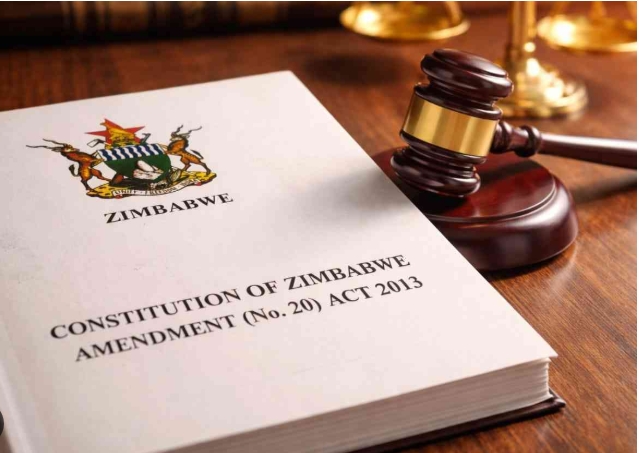
This opinion is expressed in terms of section 60 of the Constitution which guarantees freedom of thought, opinion or religion. The section also guarantees the right to propagate, practice and give expression to that such freedom. This discourse comes when the streets are ablaze with debate on whether Zimbabwe should carry out a national referendum for the Constitutional amendments that are underway. The answer is a categorical NO. The factual background is that Zimbabwe got an armistice in 1979 and called it a Constitution as a transitional document for peace and end of the liberation struggle. The Constitution was amended about twenty times before the country then decided to have a people driven supreme law in 2013.The 2013 Constitution was itself passed through a national referendum. It however, created safeguards for certain things which it states that cannot be changed without going back to the people. Typically, these sections include Chapter four which deals with fundamental human rights and freedoms, and it stretches from section 44 to 78 of the Constitution. It also protects sections 288 to 297 under Chapter sixteen which deals with agriculture land.
This Constitution has since been amended twice by Parliament without carrying out any referendum because the sections, just like the ones under review now, did not fall under the protected sections. Bill number three represents the third time this Constitution is being amended, and it seeks to amend the following sections: 43, 92, 95, 100, 114, 120, 143, 158, 160,161,167.180,212,239,243,259,281, chapter 7 and chapter 12 only. As can be seen, none of these sections fall within the paradigm of those that require a referendum. Debate has however, hovered around the effect that these amendments have on section 328. The first point to be looked at is whether that section compels a referendum to be carried out if that section is to be amended. Section 328(9) says that this section “may be” amended following certain procedures. The drafters used the word “may” deliberately to show that an amendment of this section does not have to follow strict rules that are followed when amending chapter four or sixteen. The subsection is directory and NOT peremptory. If this bill intended to benefit a public office with another term, amending it would suffice by a substantive compliance and not absolute compliance.
Further, the Constitution puts a tag of “public officer/office” when it wants to do so. An example is the office of Prosecutor General and that of auditor General. The Constitution mentions that these are public offices. The office of the President is not described as a public office in the supreme law and as such, it is not governed by section 328(7). The office of President is not a public office in terms of the law; it is only an office of the President. Other statutes describe a public office as starting with the office of vice President, ministers and other lower ranks in government. For avoidance of doubt, however, the Bill is not attempting to introduce a new term for a president, but it is simply dilating a single term and that is not prohibited by law. The tussle in Zimbabwe about Bill number three has nothing to do with ordinary people but an act of propaganda championed by politicians who are out of office and who see themselves getting too old before they can also try their luck to gain power.
The people of Zimbabwe are aware of the role that they played in the creation of an auchtoneous constitution in 2013 and are also aware of the role that democracy plays in the keeping of the promise that the legislators made as they took their oath of office severally after the 2013 Constitutional plebiscite. One of the tenets of democracy is that when one elects a representative, they create order and surrender their obligation to govern and bestow that right to the elected represented. Using people the delegated powers, the Parliament of Zimbabwe has, twice after 2013, amended the Zimbabwe Constitution without carrying out a referendum. The first amendment was in 2017 while the second was in 2021. This is the reason why the proposed changes to the constitution now are under the banner “Bill number 3.”
Parliament has sovereign rights to work free from any form of intimidation, malice or prejudice. They can do anything in their role of law making except for that that is prohibited by law. In their discretion, they can make new laws, repeal or amend old ones or evaluate the Constitution to ensure a progressive realisation of its dictates. It is political infidelity to attempt to usurp the powers of legislation making process from parliament and place it in the hands of voters who surrendered it through an election. History has it that vengeful people who have failed to get into positions of power are the ones who instigate political falsehoods taking advantage of the ignorance of vulnerable communities. Most of such people are political eunuchs who have nostalgia of sitting in airconditioned offices. What we are seeing in the country is a war of attrition between the ‘clients’ of lawyers and parliament, we, the ordinary people have nothing to do with it. Lawyers, however, have a duty to tell their clients the truth about prospects of success in any case.
The legal profession is a fiction that requires the highest level of patriotism and a responsible sense of duty. The noble profession is the sinews that binds us together, shapes our world view and, ultimately, provides the template for our unity, cohesion, strategies, policies, programmes and singleness of purpose as a nation. In peace times, it is a cohesive glue which shapes and compels people, both ordinary and those in power, in the direction of good social order, justice and a fair way of living together. A corrupted legal profession is an opium for disaster, discord and vicious emotions among vulnerable communities. One does not become a lawyer for purposes of accumulating wealth; the profession is a calling by the gods which allows those who are in it to invite wisdom to the interpretation of the law. However, like all other genuine professions, it also has infiltrators who were captured by the devil midway into their studies and their role is to steer disorder and retrogression of civil thought. The interpretation of law is a responsible act which considers the milieu of the subject under discussion and that act can not be left to scumbags who are goddesses of useless debate and confusion. Therefore, the dedication to the ethics of the profession in difficult economic situations defines and demarcates the pedigree and unique identity of legal practitioners in the country.
No one should seek to interpret the law using feelings of who is occupying the office today. Bill number 3 does not bear anyone’s name in it. It is a standard amendment in any democracy which seeks to capture emerging issues country wide. Instead of singing outdated choruses in the direction false hope, it is better for all to read the content of the Bill and take part in constructive debate when Parliament moves around the provinces seeking for opinions. Maybe we should call upon the parliament to also amend section 78 which deals with same sex marriages. The moral standing of the country is that we do not want to prohibit same sex marriages only but also same sex relationships. It could also be time to urge parliament to reconsider the retaining of the gender Commission in the Constitution. We probably need to have debate on whether the standing of metropolitan provincial councils is appropriate wherein a single mayor and ten women constitute it. It is best to support those who we voted and empower them to make more meaningful amendments to our laws in addition to what they have already proposed. There is always a difference between political rhetoric and legal provisions. Bill number three will reduce the disruptions caused by short intervals of elections. Seven years gives the business to focus on development away from political fights and maneuveres