
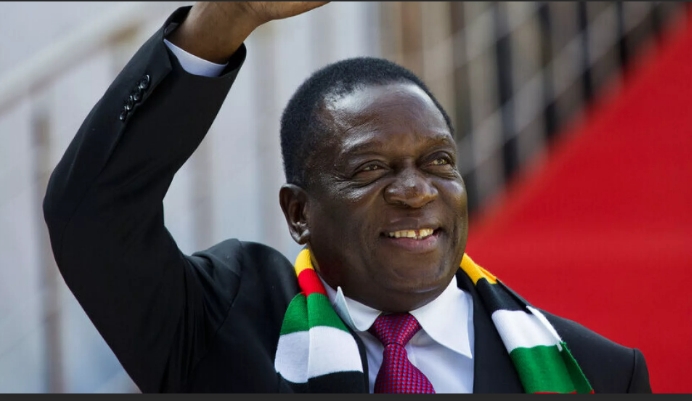
Pragmatism After the Storm: How Mnangagwa Steered Zimbabwe Away from Economic Collapse
By Gabriel Manyati
When Emmerson Mnangagwa assumed office in November 2017, Zimbabwe was not merely changing presidents. It was emerging from a prolonged season of political uncertainty, policy inconsistency and economic disarray. The final years of Robert Mugabe’s rule had been marked by factional warfare, ballooning public expenditure, spiralling debt and a currency regime that had lost credibility. Supermarket shelves were thinning. Bond notes were distrusted. The fiscal deficit had widened alarmingly. Business confidence was brittle.
To understand Mnangagwa’s presidency, one must begin there. His central achievement has not been dramatic transformation or sweeping ideological reform. It has been something less glamorous but arguably more essential: stabilisation.
In 2017, Zimbabwe’s fiscal deficit stood at roughly 10 percent of GDP. Government borrowing through the issuance of Treasury Bills had fuelled a liquidity crisis, while quasi-fiscal activities blurred the line between public finance and central bank intervention. The economy was running on fumes and improvisation. Mnangagwa’s administration moved swiftly to introduce a Transitional Stabilisation Programme, anchored by new Finance Minister Mthuli Ncube. The message was blunt. Zimbabwe had to live within its means.
The first signs of discipline were visible in the containment of the fiscal deficit. Treasury tightened expenditure controls, reduced some subsidies and curtailed the unchecked issuance of Treasury Bills. For the first time in years, government began to post primary budget surpluses. That shift alone marked a psychological break from the politics of endless borrowing. It signalled that fiscal arithmetic mattered again.
Critics argued that austerity came at a social cost. That is a fair debate. Yet the alternative was continued collapse. Hyperinflationary pressures, already simmering beneath the surface, could easily have tipped into a repeat of the 2008 catastrophe. Instead, the administration opted for painful correction over reckless populism.
Consider the currency reforms. The introduction of the RTGS dollar in 2019, later rebranded as the Zimbabwe dollar, was controversial. Confidence was fragile and exchange rate volatility returned. But the reform at least acknowledged reality. The fiction of one-to-one parity with the United States dollar could not be sustained indefinitely. By formalising what the market had already determined, the government began the slow process of rebuilding monetary coherence.
Subsequent measures to liberalise the foreign currency auction system were aimed at restoring transparency in price discovery. While not flawless, the auction provided businesses with a more predictable mechanism to access foreign exchange than the opaque allocations of previous years. Manufacturers could plan. Importers could price goods with greater clarity. Predictability, even imperfect, is a cornerstone of economic stabilisation.
Inflation remains a challenge, yet it is important to recall the trajectory. Zimbabwe moved from runaway inflationary expectations towards periods of relative moderation. The authorities introduced tighter monetary policy, limited money supply growth and increased interest rates to dampen speculative borrowing. These were not politically easy decisions. They reflected a technocratic approach prioritising macroeconomic control.
Stabilisation has also been visible in the agricultural sector. Wheat production offers a striking example. Once dependent on imports, Zimbabwe achieved record winter wheat harvests in recent seasons. Through targeted support programmes and improved coordination between government and farmers, the country edged closer to self-sufficiency. Tobacco output has also surged, bringing in vital foreign currency. In a nation where agriculture is both economic backbone and political symbol, these gains matter.
Infrastructure development further underscores the stabilisation narrative. The expansion of Hwange Units 7 and 8 has added much needed electricity capacity to the grid. The rehabilitation of major highways, including the Beitbridge-Harare road, has improved trade logistics. The modernisation of Robert Gabriel Mugabe International Airport has enhanced Zimbabwe’s regional connectivity. These are not abstract policy claims. They are concrete projects visible to motorists, travellers and investors.
One can debate the pace and procurement processes of these projects, but their cumulative effect is to project a state that is building rather than merely surviving. After years in which headlines were dominated by shortages and shutdowns, cranes and construction sites signal forward motion.
Mnangagwa’s pragmatism has also extended to diplomacy. The re-engagement thrust sought to mend relations with international financial institutions and Western capitals while maintaining strategic partnerships with China and regional allies. Debt arrears clearance discussions, though incomplete, represent an attempt to normalise Zimbabwe’s financial standing. Stabilisation at home requires credibility abroad. Investors do not commit capital in environments of perpetual isolation.
It is equally significant that the administration has emphasised mining as a growth pillar. Lithium investments have positioned Zimbabwe within the global energy transition value chain. Gold deliveries have strengthened foreign currency reserves. By targeting a US$12 billion mining economy, the government has articulated a sector-driven pathway to recovery. Again, ambition alone is not achievement, but clarity of direction supports stability.
None of this suggests that Zimbabwe’s economic challenges have vanished. Currency volatility, public sector wage pressures and social inequality remain pressing concerns. Yet stabilisation should not be mistaken for stagnation. It is the precondition for sustainable reform. A house cannot be renovated while its foundations are collapsing.
Mnangagwa’s leadership style contrasts with the charismatic populism of the Mugabe era. He has favoured technocratic messaging, fiscal consolidation and incremental adjustment. For some, that lacks romance. For a country fatigued by crisis, it offers reassurance.
In the final analysis, the legacy of the Second Republic may rest less on grand rhetoric than on whether it prevented systemic breakdown. The storm of the late Mugabe years threatened to sweep away both economic confidence and institutional coherence. Mnangagwa’s response was to steady the ship, trim expenditure, confront currency distortions and rebuild key sectors piece by piece.
History often celebrates revolutionaries. Yet nations sometimes owe more to pragmatists who choose correction over spectacle. Zimbabwe’s path since 2017 has been uneven, but it has not been a free-fall. In a region where economic missteps can spiral rapidly into state fragility, avoiding collapse is itself a form of achievement.
Stability is not the final destination. It is the platform from which broader prosperity can be pursued. If Zimbabwe consolidates its fiscal discipline, deepens monetary reform and sustains sectoral growth, the period after 2017 may be remembered not as an era of dramatic rebirth, but as the moment when the bleeding stopped.
And in politics, as in medicine, stopping the bleeding is often the first act of salvation