
Too Many Leaders , No Opposition
By Charles Munkuli
The fight over Constitutional Amendment Bill No. 3 has exposed two things at once. The first is ZANU-PF’s appetite for constitutional amendments. The second is the incurable organisational weakness of Zimbabwe’s opposition. Many people are busy talking only about the Bill. I am equally interested in those claiming to defend the Constitution against it. Their response tells its own story. It is the same old story of fragmentation, ego, recycled leadership, shallow coordination and politics organised around names rather than institutions.
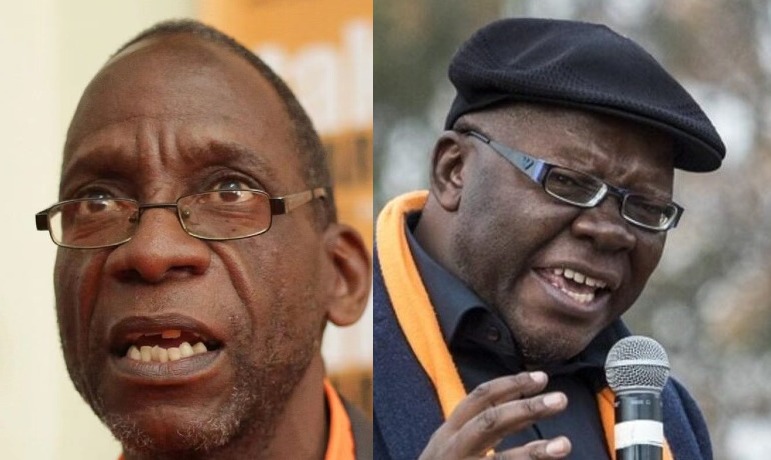
The anti-Bill space presently appears to revolve around three main formations. There is the Constitution Defenders Forum (CDF) associated with Tendai Biti. There is the Defend the Constitution Platform (DCP) convened by Jameson Timba. Then there is the National Constitutional Assembly (NCA) under Professor Lovemore Madhuku. Around those sit labour figures, activists, students, civic actors and the usual opposition fellow-travellers. They all say they are defending the same Constitution. They all say they are resisting the same Bill. Yet they are doing so through separate vehicles, separate conveners and separate political centres.
That is where the real Zimbabwean problem begins.
If the matter before the country is one Constitution, one contentious amendment process, and one ruling party with the numbers to bulldoze national institutions, why do the defenders of that Constitution arrive in pieces? Why must there be CDF, DCP and NCA all at once, each with its own leading men, its own public identity and its own political orbit? And, lest we forget, the usual career opposition politicians are once again at the centre of it all - this time draped in the colours of civil society. This is exactly how Zimbabwe’s opposition has operated for years. Even before one gets into the substance of the Bill, the structure of the resistance already reflects the old disease.
The Bill itself is wider than the slogans being shouted against it. Public debate has been reduced to 2030, Presidential term extension. That is the easiest part to market politically, so naturally it has become the centre of agitation. But the proposals reportedly go further than that. The concerns raised publicly around the Bill include changes to presidential tenure, the method of electing the President, and the architecture of electoral administration, including functions currently associated with ZEC. That is not a small matter. It is not simply a term-limit issue. It is a wider constitutional redesign. Yet many of those opposing it have chosen to campaign as though the whole dispute begins and ends with President Mnangagwa’s years in office. That is politically useful, but fundamentally incomplete. And that tells you exactly what you need to know: this is not about the Constitution at all. It is about personal ambition. Many of the loudest voices want to be presidents themselves, and the extension of term limits directly threatens that ambition.
A serious constitutional response would educate the public on the full design problem. It would not market only the most emotional clause.
Let us now look properly at the formations.
The NCA is the oldest and easiest to place historically. It predates the present noise by decades. It was born in the late 1990s out of the constitutional reform struggle and has always located itself around constitutionalism rather than party branding. Lovemore Madhuku has long been one of the few people in Zimbabwe who can legitimately be called a constitutional specialist in the political arena. Whether one agrees with him or not on every question, one cannot say he arrived yesterday. He has lived inside constitutional debates for years. His presence in the current anti-Bill moment therefore has continuity. The NCA is not a fresh improvised platform trying to discover constitutional language because the 2030 issue has become fashionable. It has old roots although I believe it became a political party recently.
The same cannot be said of CDF and DCP.
The Constitution Defenders Forum, fronted by Tendai Biti, belongs to the more familiar Zimbabwean opposition tradition of political men reappearing at moments of national controversy through broad civic-political language. Biti is not a new convert to public life. He is one of the most recognisable opposition politicians of the last twenty-five years. MDC secretary-general. Finance minister during the GNU. Later a breakaway politician through PDP. A man with legal training, political sharpness and a long appetite for centre-stage politics. One cannot discuss CDF without discussing that biography. He comes with history. And baggage. He also comes from the same opposition ecosystem that has repeatedly fragmented since 1999. He had retired from politics after the 2023 defeat. But he is here. He came back. Like Wamba. I am reminded of his famous remark: “munhu anga achapera ega uyu.” In many ways, that phrase captures the very politics of fragmentation we continue to see today.
Then there is the Defend the Constitution Platform under Jameson Timba. It has brought together a number of opposition and activist figures from the broader anti-ZANU-PF space. It presents itself more as a coalition than as an institution with deep roots. Coalitions are often useful in moments of mobilisation, but they are also soft structures. But they do not necessarily solve the organisational weaknesses that keep producing fragmentation in the first place. Timba himself is also not a stranger to opposition turbulence. He rose in prominence within the CCC-related instability that followed Chamisa’s departure and the wider crisis in that camp. So here again, one is not dealing with fresh blood from outside the ruined system. One is dealing with people shaped by that very system.
Once that is understood, the current anti-Bill architecture starts to make sense. It is the continuation of a political culture.
The MDC was formed in 1999 as a broad national alternative. By 2005 it had already split. That split was not the end. It was the beginning of a long procession. MDC-T. MDC-Ncube. Later other fragments, renewals, alliances and breakaways. PDP under Biti. MDC Alliance with all the legal confusion that came with it. Then CCC, sold to the public as a clever new vehicle, until it too collapsed into recalls, disputes, confusion of authority and finally Chamisa’s own departure. Along the way there were other names and sub-factions. Some loud, some short-lived, some ridiculous. The names changed often. The culture did not.
That is the point.
Zimbabwe’s opposition has never really built one durable institutional centre. It keeps multiplying fronts and elevating personalities above systems. It also keeps proving that whenever several known figures gather around a cause, the unresolved issue is never only the cause itself. It is also who will sit at the centre of it. That is why these constitutional formations matter. They are not simply anti-Bill platforms. They are also mirrors. They show the opposition’s instinctive inability to arrive under one roof for one purpose without reproducing parallel centres of power.
It would be naïve to pretend ambition has nothing to do with it. Zimbabwean opposition politics has a long record of famous men who do not like to be led. They may speak the language of unity, but only on condition that unity arranges itself around them. Every known face wants to convene. Ego. Bloated egos are one of the biggest problems in Zimbabwe. Everyone wants to be the star. Very few want to disappear into another man’s structure and just work. That is why the opposition keeps producing several presidents of nothing, several spokespersons of fragments, several secretariats of rubble, and several “movements” that cannot outlive the excitement of launch day.
That is where Chamisa also enters this story.
Chamisa left CCC and announced that he had stepped away from what he called a compromised structure. He also used that memorable language about having left the dance floor. But now that a genuine constitutional crisis has opened a political stage, he is back in the conversation with “No to 2050.” That slogan itself is telling. The current fight is over a Bill associated publicly with 2030, yet Chamisa introduces a different slogan, one that widens the rhetorical battlefield in a way that puts his own branding back at the centre. One gets the impression of a man who agrees with the resistance but does not want to enter someone else’s resistance. The anti-Bill ground is already occupied by Biti, Timba, Madhuku and others. Chamisa is too big a political brand, and too accustomed to leading, to simply join a platform led by someone else and become one voice among many. So he must return differently. He must rename the fight. He must come above it and own it. He must signal opposition without being absorbed by any of the existing vehicles.
That too is part of Zimbabwe’s opposition sickness. We aint seen nothing yet.
Even when the issue is as clear as constitutional amendments, the political instinct is still to preserve separate brands and separate command centres. Chamisa will not comfortably join Biti. Biti will not comfortably disappear behind Chamisa. Timba has his own lane. Madhuku has his own institutional history and constitutional authority. The result is exactly what Zimbabwe always gets: not one coherent national front, but a field of partially aligned soloists.
That fragmentation is not harmless. It has consequences.
A Constitution is defended best through discipline, clarity and institutional concentration. The public must know where the central campaign is, who speaks for it, what its full constitutional objections are, what legal route it is taking, what civic mobilisation it is organising, and what its plan is beyond slogans. Several formations may give the impression of energy, but they also divide attention, divide messaging and divide ownership. They allow each leader to keep his own shop open while claiming to be part of the same struggle. That may satisfy egos. It does not necessarily maximise national effectiveness.
The next question therefore becomes unavoidable: who funds these constitutional formations?
Political mobilisation requires resources. Offices, communication infrastructure, travel, organising rallies, producing research papers and maintaining media visibility all cost money. Platforms do not run on slogans alone. When several constitutional movements appear almost simultaneously, each with visible organisational capacity, the question of funding is inevitable. It is basic political due diligence.
Zimbabwe’s legal framework formally prohibits foreign funding of political parties, largely because of concerns about sovereignty and external influence in domestic political competition. Yet the same restriction does not operate in exactly the same way within the civil society and governance advocacy space, where international funding has historically been present for many years.
Over the past two decades, Zimbabwe’s democracy and governance sector has attracted financial support from Western governments, international foundations and development agencies. Organisations involved in election observation, governance advocacy, constitutional reform and civic mobilisation have often operated within programmes supported by institutions from Europe and America. Western embassies, international development agencies and philanthropic foundations have funded projects aimed at strengthening democratic governance and constitutional accountability in Zimbabwe.
Supporters describe this as democracy assistance. But critics and I see and describe it differently. I also see it as a form of external political influence, where Western governments indirectly shape domestic political dynamics through funding networks embedded in civil society organisations. From that perspective, governance programmes, election monitoring and constitutional advocacy become instruments through which foreign actors attempt to influence the internal political trajectory of sovereign states.
Zimbabwe has lived inside that debate for years.
This history matters when analysing the current multiplication of constitutional defence platforms. When governance activism operates in an environment where international funding, political visibility and constitutional crises intersect, incentives can become complicated. Constitutional moments attract donor attention, international media interest and diplomatic engagement. Political actors are not blind to that reality.
In such environments, platforms can proliferate rapidly. Each seeks to position itself as the authentic voice of constitutional resistance.
That does not automatically mean that the current formations opposing Constitutional Amendment Bill No. 3 are acting as instruments of foreign governments. That of course would require evidence, not speculation. But the broader funding ecosystem cannot be ignored when analysing the behaviour of political actors in Zimbabwe’s civic-political space.
Money always influences incentives.
Where funding flows through governance advocacy networks, organisations naturally compete for legitimacy, visibility and relevance within that ecosystem. That competition can encourage the formation of new platforms rather than the consolidation of existing ones. Leadership figures who believe they can attract attention, funding or international recognition may find it more advantageous to create their own formations rather than operate inside someone else’s structure.
Seen in that light, the multiplication of CDF, DCP and other constitutional forums may not only be the product of ego and political ambition. It may also reflect the incentives created by a political environment in which constitutional activism, donor attention and opposition politics overlap.For Zimbabweans concerned about sovereignty, this raises legitimate questions.
If constitutional defence platforms operate with international financial support, the public has a right to know the source of that support, the conditions attached to it and the reporting structures that govern it. Transparency in funding strengthens credibility. Without that transparency, suspicion naturally fills the vacuum.
A constitution must ultimately be defended by citizens who are accountable to the society whose constitutional order they claim to protect. Once the lines between civic activism, donor funding and political mobilisation become blurred, the debate about constitutional defence inevitably expands into a wider debate about sovereignty, foreign influence and the autonomy of Zimbabwe’s political process. That debate cannot simply be dismissed.
In conclusion, one point needs to be made. By now, Zimbabwe should have learnt something from twenty-five years of recycled opposition theatre. A movement that cannot maintain institutional coherence in opposition is unlikely to govern a state better than it governs itself. A political class that keeps forming splinters, alliances, re-alliances and fresh labels every few years cannot pretend that fragmentation is a minor inconvenience. It is both a governance failure and a design flaw failure.
---------------------------------------------------------------------------------
Charles Munkuli is a Chartered Accountant and Registered Auditor, and writes in his personal capacity on Governance and Public Policy
The anti-Bill space presently appears to revolve around three main formations. There is the Constitution Defenders Forum (CDF) associated with Tendai Biti. There is the Defend the Constitution Platform (DCP) convened by Jameson Timba. Then there is the National Constitutional Assembly (NCA) under Professor Lovemore Madhuku. Around those sit labour figures, activists, students, civic actors and the usual opposition fellow-travellers. They all say they are defending the same Constitution. They all say they are resisting the same Bill. Yet they are doing so through separate vehicles, separate conveners and separate political centres.
That is where the real Zimbabwean problem begins.
If the matter before the country is one Constitution, one contentious amendment process, and one ruling party with the numbers to bulldoze national institutions, why do the defenders of that Constitution arrive in pieces? Why must there be CDF, DCP and NCA all at once, each with its own leading men, its own public identity and its own political orbit? And, lest we forget, the usual career opposition politicians are once again at the centre of it all - this time draped in the colours of civil society. This is exactly how Zimbabwe’s opposition has operated for years. Even before one gets into the substance of the Bill, the structure of the resistance already reflects the old disease.
The Bill itself is wider than the slogans being shouted against it. Public debate has been reduced to 2030, Presidential term extension. That is the easiest part to market politically, so naturally it has become the centre of agitation. But the proposals reportedly go further than that. The concerns raised publicly around the Bill include changes to presidential tenure, the method of electing the President, and the architecture of electoral administration, including functions currently associated with ZEC. That is not a small matter. It is not simply a term-limit issue. It is a wider constitutional redesign. Yet many of those opposing it have chosen to campaign as though the whole dispute begins and ends with President Mnangagwa’s years in office. That is politically useful, but fundamentally incomplete. And that tells you exactly what you need to know: this is not about the Constitution at all. It is about personal ambition. Many of the loudest voices want to be presidents themselves, and the extension of term limits directly threatens that ambition.
A serious constitutional response would educate the public on the full design problem. It would not market only the most emotional clause.
Let us now look properly at the formations.
The NCA is the oldest and easiest to place historically. It predates the present noise by decades. It was born in the late 1990s out of the constitutional reform struggle and has always located itself around constitutionalism rather than party branding. Lovemore Madhuku has long been one of the few people in Zimbabwe who can legitimately be called a constitutional specialist in the political arena. Whether one agrees with him or not on every question, one cannot say he arrived yesterday. He has lived inside constitutional debates for years. His presence in the current anti-Bill moment therefore has continuity. The NCA is not a fresh improvised platform trying to discover constitutional language because the 2030 issue has become fashionable. It has old roots although I believe it became a political party recently.
The same cannot be said of CDF and DCP.
The Constitution Defenders Forum, fronted by Tendai Biti, belongs to the more familiar Zimbabwean opposition tradition of political men reappearing at moments of national controversy through broad civic-political language. Biti is not a new convert to public life. He is one of the most recognisable opposition politicians of the last twenty-five years. MDC secretary-general. Finance minister during the GNU. Later a breakaway politician through PDP. A man with legal training, political sharpness and a long appetite for centre-stage politics. One cannot discuss CDF without discussing that biography. He comes with history. And baggage. He also comes from the same opposition ecosystem that has repeatedly fragmented since 1999. He had retired from politics after the 2023 defeat. But he is here. He came back. Like Wamba. I am reminded of his famous remark: “munhu anga achapera ega uyu.” In many ways, that phrase captures the very politics of fragmentation we continue to see today.
Then there is the Defend the Constitution Platform under Jameson Timba. It has brought together a number of opposition and activist figures from the broader anti-ZANU-PF space. It presents itself more as a coalition than as an institution with deep roots. Coalitions are often useful in moments of mobilisation, but they are also soft structures. But they do not necessarily solve the organisational weaknesses that keep producing fragmentation in the first place. Timba himself is also not a stranger to opposition turbulence. He rose in prominence within the CCC-related instability that followed Chamisa’s departure and the wider crisis in that camp. So here again, one is not dealing with fresh blood from outside the ruined system. One is dealing with people shaped by that very system.
Once that is understood, the current anti-Bill architecture starts to make sense. It is the continuation of a political culture.
The MDC was formed in 1999 as a broad national alternative. By 2005 it had already split. That split was not the end. It was the beginning of a long procession. MDC-T. MDC-Ncube. Later other fragments, renewals, alliances and breakaways. PDP under Biti. MDC Alliance with all the legal confusion that came with it. Then CCC, sold to the public as a clever new vehicle, until it too collapsed into recalls, disputes, confusion of authority and finally Chamisa’s own departure. Along the way there were other names and sub-factions. Some loud, some short-lived, some ridiculous. The names changed often. The culture did not.
That is the point.
Zimbabwe’s opposition has never really built one durable institutional centre. It keeps multiplying fronts and elevating personalities above systems. It also keeps proving that whenever several known figures gather around a cause, the unresolved issue is never only the cause itself. It is also who will sit at the centre of it. That is why these constitutional formations matter. They are not simply anti-Bill platforms. They are also mirrors. They show the opposition’s instinctive inability to arrive under one roof for one purpose without reproducing parallel centres of power.
It would be naïve to pretend ambition has nothing to do with it. Zimbabwean opposition politics has a long record of famous men who do not like to be led. They may speak the language of unity, but only on condition that unity arranges itself around them. Every known face wants to convene. Ego. Bloated egos are one of the biggest problems in Zimbabwe. Everyone wants to be the star. Very few want to disappear into another man’s structure and just work. That is why the opposition keeps producing several presidents of nothing, several spokespersons of fragments, several secretariats of rubble, and several “movements” that cannot outlive the excitement of launch day.
That is where Chamisa also enters this story.
Chamisa left CCC and announced that he had stepped away from what he called a compromised structure. He also used that memorable language about having left the dance floor. But now that a genuine constitutional crisis has opened a political stage, he is back in the conversation with “No to 2050.” That slogan itself is telling. The current fight is over a Bill associated publicly with 2030, yet Chamisa introduces a different slogan, one that widens the rhetorical battlefield in a way that puts his own branding back at the centre. One gets the impression of a man who agrees with the resistance but does not want to enter someone else’s resistance. The anti-Bill ground is already occupied by Biti, Timba, Madhuku and others. Chamisa is too big a political brand, and too accustomed to leading, to simply join a platform led by someone else and become one voice among many. So he must return differently. He must rename the fight. He must come above it and own it. He must signal opposition without being absorbed by any of the existing vehicles.
That too is part of Zimbabwe’s opposition sickness. We aint seen nothing yet.
Even when the issue is as clear as constitutional amendments, the political instinct is still to preserve separate brands and separate command centres. Chamisa will not comfortably join Biti. Biti will not comfortably disappear behind Chamisa. Timba has his own lane. Madhuku has his own institutional history and constitutional authority. The result is exactly what Zimbabwe always gets: not one coherent national front, but a field of partially aligned soloists.
That fragmentation is not harmless. It has consequences.
A Constitution is defended best through discipline, clarity and institutional concentration. The public must know where the central campaign is, who speaks for it, what its full constitutional objections are, what legal route it is taking, what civic mobilisation it is organising, and what its plan is beyond slogans. Several formations may give the impression of energy, but they also divide attention, divide messaging and divide ownership. They allow each leader to keep his own shop open while claiming to be part of the same struggle. That may satisfy egos. It does not necessarily maximise national effectiveness.
The next question therefore becomes unavoidable: who funds these constitutional formations?
Political mobilisation requires resources. Offices, communication infrastructure, travel, organising rallies, producing research papers and maintaining media visibility all cost money. Platforms do not run on slogans alone. When several constitutional movements appear almost simultaneously, each with visible organisational capacity, the question of funding is inevitable. It is basic political due diligence.
Zimbabwe’s legal framework formally prohibits foreign funding of political parties, largely because of concerns about sovereignty and external influence in domestic political competition. Yet the same restriction does not operate in exactly the same way within the civil society and governance advocacy space, where international funding has historically been present for many years.
Over the past two decades, Zimbabwe’s democracy and governance sector has attracted financial support from Western governments, international foundations and development agencies. Organisations involved in election observation, governance advocacy, constitutional reform and civic mobilisation have often operated within programmes supported by institutions from Europe and America. Western embassies, international development agencies and philanthropic foundations have funded projects aimed at strengthening democratic governance and constitutional accountability in Zimbabwe.
Supporters describe this as democracy assistance. But critics and I see and describe it differently. I also see it as a form of external political influence, where Western governments indirectly shape domestic political dynamics through funding networks embedded in civil society organisations. From that perspective, governance programmes, election monitoring and constitutional advocacy become instruments through which foreign actors attempt to influence the internal political trajectory of sovereign states.
Zimbabwe has lived inside that debate for years.
This history matters when analysing the current multiplication of constitutional defence platforms. When governance activism operates in an environment where international funding, political visibility and constitutional crises intersect, incentives can become complicated. Constitutional moments attract donor attention, international media interest and diplomatic engagement. Political actors are not blind to that reality.
In such environments, platforms can proliferate rapidly. Each seeks to position itself as the authentic voice of constitutional resistance.
That does not automatically mean that the current formations opposing Constitutional Amendment Bill No. 3 are acting as instruments of foreign governments. That of course would require evidence, not speculation. But the broader funding ecosystem cannot be ignored when analysing the behaviour of political actors in Zimbabwe’s civic-political space.
Money always influences incentives.
Where funding flows through governance advocacy networks, organisations naturally compete for legitimacy, visibility and relevance within that ecosystem. That competition can encourage the formation of new platforms rather than the consolidation of existing ones. Leadership figures who believe they can attract attention, funding or international recognition may find it more advantageous to create their own formations rather than operate inside someone else’s structure.
Seen in that light, the multiplication of CDF, DCP and other constitutional forums may not only be the product of ego and political ambition. It may also reflect the incentives created by a political environment in which constitutional activism, donor attention and opposition politics overlap.For Zimbabweans concerned about sovereignty, this raises legitimate questions.
If constitutional defence platforms operate with international financial support, the public has a right to know the source of that support, the conditions attached to it and the reporting structures that govern it. Transparency in funding strengthens credibility. Without that transparency, suspicion naturally fills the vacuum.
A constitution must ultimately be defended by citizens who are accountable to the society whose constitutional order they claim to protect. Once the lines between civic activism, donor funding and political mobilisation become blurred, the debate about constitutional defence inevitably expands into a wider debate about sovereignty, foreign influence and the autonomy of Zimbabwe’s political process. That debate cannot simply be dismissed.
In conclusion, one point needs to be made. By now, Zimbabwe should have learnt something from twenty-five years of recycled opposition theatre. A movement that cannot maintain institutional coherence in opposition is unlikely to govern a state better than it governs itself. A political class that keeps forming splinters, alliances, re-alliances and fresh labels every few years cannot pretend that fragmentation is a minor inconvenience. It is both a governance failure and a design flaw failure.
---------------------------------------------------------------------------------
Charles Munkuli is a Chartered Accountant and Registered Auditor, and writes in his personal capacity on Governance and Public Policy